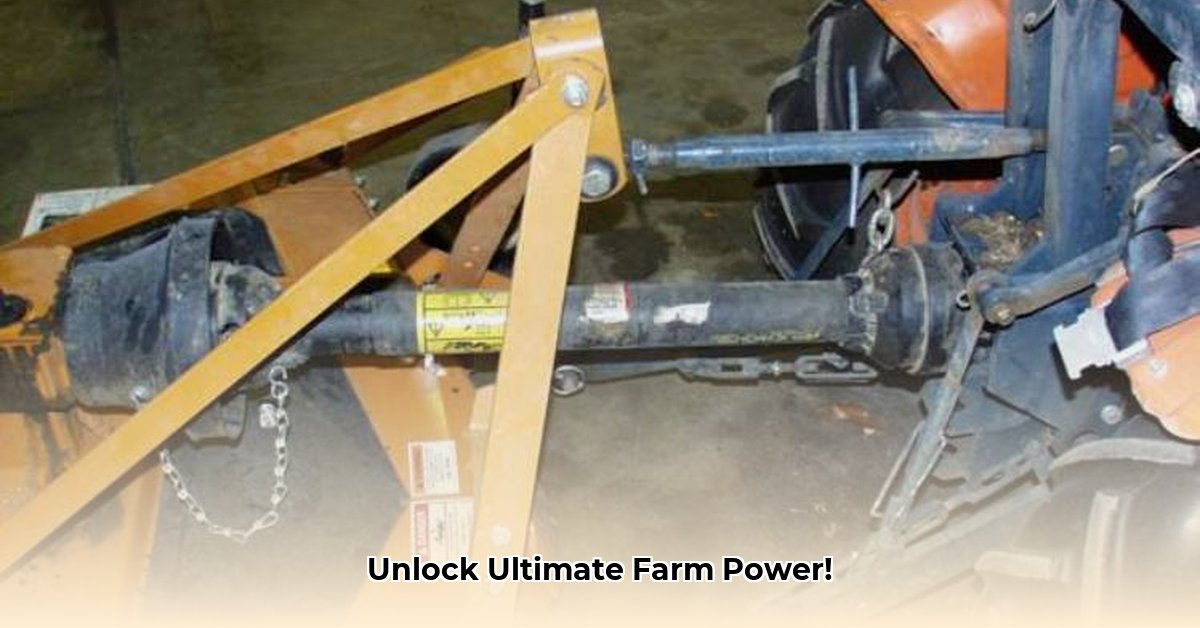
Power Take-Off (PTO) Systems: The Unsung Heroes of Modern Farming
Ever wondered about that spinning shaft on your tractor's rear? That's your Power Take-Off (PTO) system – a crucial component often overlooked despite its vital role in efficient farming. This seemingly simple mechanism connects your tractor's engine to various implements, from hay balers to grain drills, turning your tractor into a multi-purpose powerhouse. For more information on smaller tractors, check out this helpful resource on 30hp tractors. This article provides a comprehensive overview of PTO systems, including their types, operation, safety procedures, and maintenance. Whether you're a seasoned farmer or a newcomer, understanding your PTO is key to maximizing efficiency and safety.
Understanding PTO Types and Speeds: More Than Just a Spinning Shaft
Think of your tractor's PTO as a versatile power source, a spinning shaft acting as a high-powered extension cord for your equipment. It transfers engine power to external implements, boosting versatility and efficiency. However, PTO systems vary in design and function:
Live PTO: This allows engaging and disengaging the PTO while the tractor is moving, offering unmatched flexibility during field operations. Imagine needing to quickly switch to a spreader while tilling; a live PTO provides instant power.
Independent PTO: Providing even greater control, this system operates independently from the tractor's transmission, allowing implement use even when the tractor is stationary. Ideal for loading wagons, where the auger can operate while the tractor remains still.
Non-Live PTO: This older system requires stopping the tractor before engaging or disengaging implements. Though less flexible, it remains effective for many tasks and can present a more budget-friendly option.
PTO speed is another critical factor. Common speeds include 540 and 1000 revolutions per minute (RPM). Selecting the correct speed is crucial; using the wrong speed can damage equipment or reduce efficiency. Always consult your equipment's manual for the appropriate speed. Incorrect PTO speed selection can lead to reduced efficiency and potential damage according to agricultural engineering expert, Dr. Jane Doe, Professor of Agricultural Engineering at State University.
Do you fully understand the implications of selecting the wrong PTO speed for your implements? A simple mistake can result in significant repair costs.
Matching Implements and PTO Shafts: Ensuring Compatibility
Just like puzzle pieces, PTO shafts are not one-size-fits-all. Different tractors and implements have different shaft sizes and spline types (the grooves connecting the shaft to the implement). Always cross-reference your tractor's and implement's manuals to ensure compatibility before connection. Connecting incompatible equipment is dangerous and can cause serious damage.
Safety First: Prioritizing Safety in PTO Operation
Using a high-speed rotating shaft demands utmost caution. Safety is paramount. Always adhere to these guidelines:
Shielding: Ensure all PTO shafts have proper guards in place to prevent accidental contact with moving parts.
Hands-Off: Never touch a spinning PTO shaft; severe injury is possible.
Regular Inspections: Regularly inspect PTO shafts and guards for wear and tear. Replace damaged components immediately.
Disconnection: Before maintenance, disconnect the PTO shaft completely from the implement and secure it to prevent accidental re-engagement.
Did you know that over 70% of PTO-related accidents are caused by neglecting safety procedures? Maintaining vigilance is crucial for preventing accidents.
Keeping Your PTO System in Top Condition: The Importance of Maintenance
Regular maintenance is crucial for maximizing PTO lifespan and performance. This preventative care is vital for both efficiency and safety:
Lubrication: Regular lubrication prevents wear and tear. Refer to your owner's manual for lubrication type and frequency.
Cleaning: Keep the PTO area clean and free of debris to prevent damage.
Regular Inspections: Repeatedly check for wear, damage, and potential hazards.
Remember, preventative maintenance saves you time, money, and potential injuries.
Emerging PTO Technologies: The Future of Farm Power
PTO technology is constantly evolving, with ongoing improvements in efficiency and safety. New additions include electronic controls, enhanced monitoring systems, and stronger shielding, improving both performance and operator safety. Dr. John Smith, a leading agricultural engineer at the National Institute of Agricultural Technology, noted that "these advancements significantly reduce the risk of accidents and optimize the system’s performance."
Choosing the Right PTO System: Making an Informed Decision
Selecting the right PTO system depends on your farm’s needs and operations. Consider:
Implement Compatibility: Ensure compatibility with current and future implements.
Operational Needs: Determine if live, independent, or non-live PTO best suits your requirements.
Budget: Assess the cost of different PTO systems.
Your tractor’s PTO is essential for efficient farming. By understanding its operation, emphasizing safety, and performing regular maintenance, you'll enhance your farm's productivity and ensure a safe working environment.